Future Cities
NL
Vision & philosophy

A city that chooses livability and happiness

Nearly every city we know grew around trade, traffic or chance. Not this one. Here one question comes first: what does a place look like that is designed for people to live together, healthy and happy?

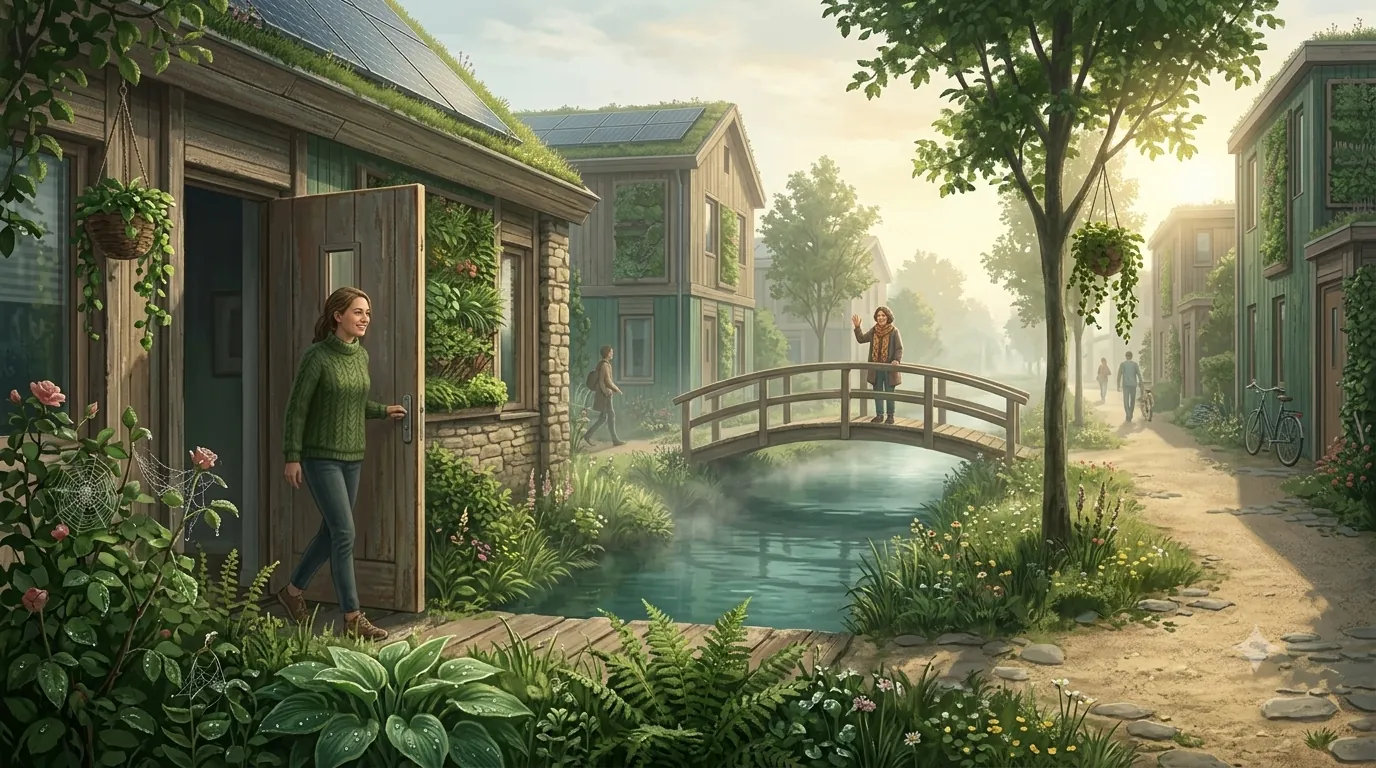
Morning in the city: someone steps out of their front door into greenery, with a quiet canal and a waving neighbour
What it is about

Two things at the centre

The first is natural living: plenty of green, space, water and air, a city where nature is not an afterthought but the foundation. The second is community: a place where you know your neighbours, where meeting people happens by itself and where no one is left to fend for themselves.

That sounds obvious, but it is not. Most cities quietly optimise for something else: traffic flow, property value, efficiency. We turn that around. Livability and happiness are not the outcome we hope for, they are the design goal we start from.

The common thread

More choices, better defaults, no coercion

One principle runs through everything, from traffic to food to the economy. The city rarely bans anything. It makes the good choice the easiest one and leaves the rest to you. You are not steered with rules and fines, but with surroundings in which the healthy and social path is simply the most attractive one.

🚲

Traffic

Car-light, not car-free. The bicycle is deliberately made unbeatable, with the straightest routes and priority everywhere. The car is not banned, it is just rarely the most convenient option.

🌱

Food

Plant-leaning, no diet rules. The green plate is the easiest to fill and the tastiest, but meat remains an ordinary choice.

🏡

Housing

Contribute for better, never work or go hungry. Your house is and stays yours, whatever happens. Effort does not buy you a roof, it buys you a nicer place.

The result is a city that trusts people instead of distrusting them.
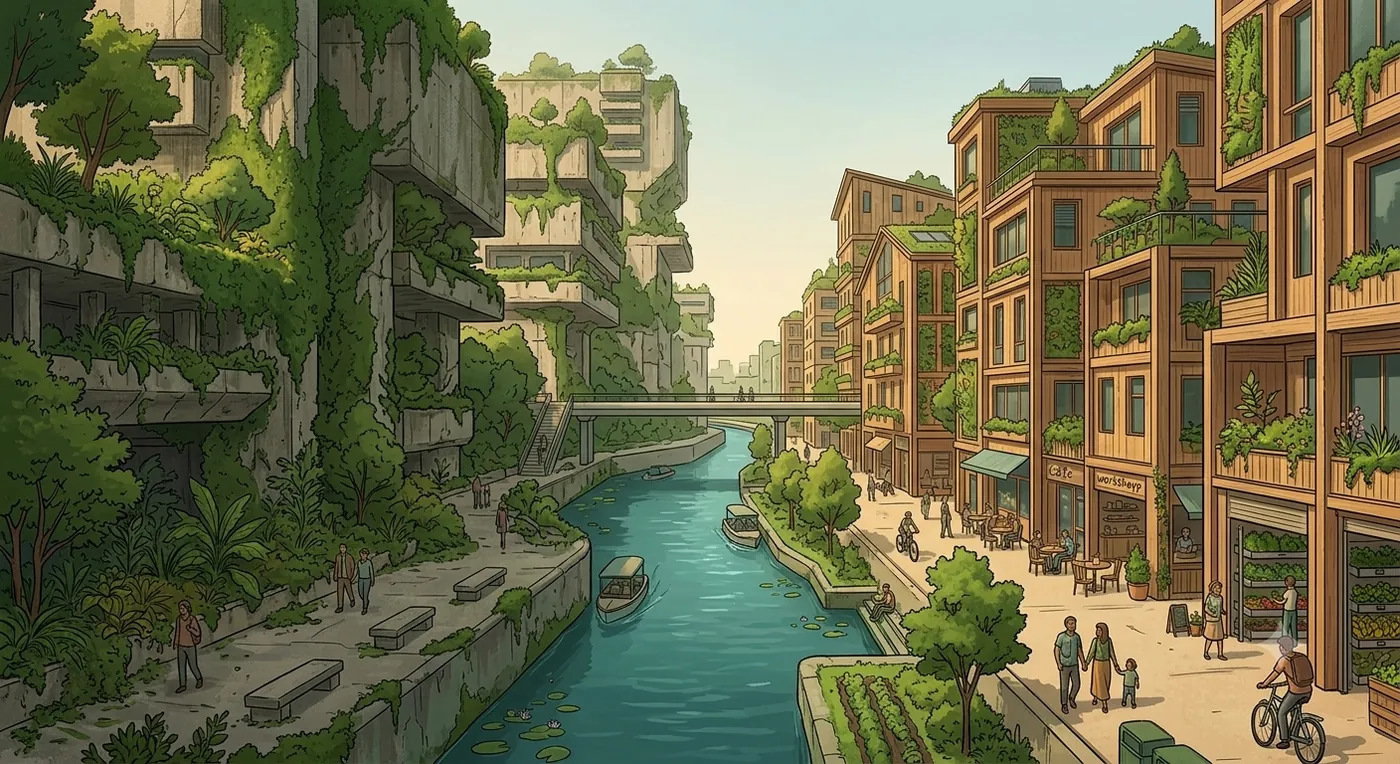
Two districts with their own character side by side: timber and green next to overgrown concrete
Ambitious, yet realistic

Far enough to dream, close enough to build

We look fifteen to thirty years ahead and build from scratch on new ground. Far enough to run ahead of what exists today, close enough that the technology we need will be mature by the time we build. No magic, just nerve.

And the city is never finished. That is not a flaw but a starting point. It is built modular and keeps growing with what people need and what becomes possible.

In a long tradition

The form borrowed, the soul built ourselves

The idea does not stand alone. As early as 1898, Ebenezer Howard sketched the garden city, a city that reconciles town and nature. Where later dreams of planned cities ran aground, conceived from above and governed from above, we deliberately bet on the opposite: ownership, a real say, and a community that governs itself. We borrow the form and build the soul ourselves.

So much for the why.

Curious what it looks like? Read on about the layout of the city, or follow the build log while the concept grows.

See the layout