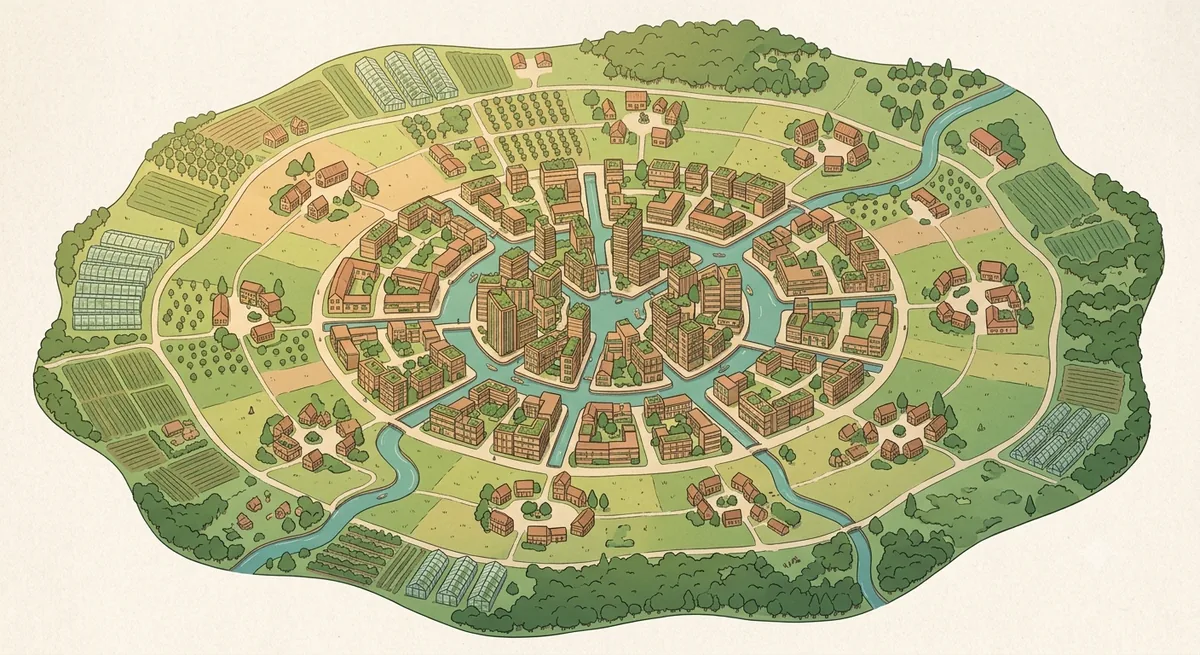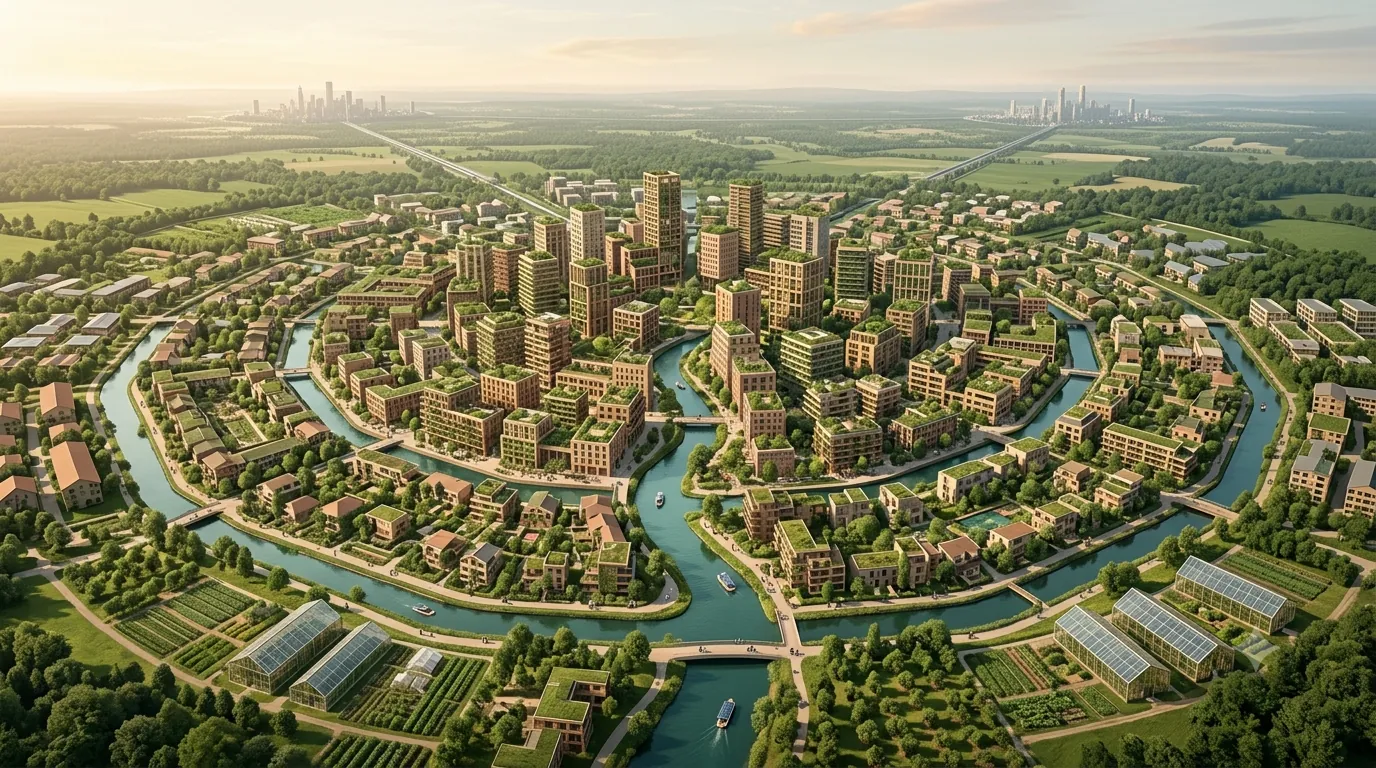
The city is concentric but organically grown: denser and taller in the middle, more open and greener towards the edge, with water winding through every ring like a river.
No compass circles, but a shape that looks grown, as if the city expanded over time. Each layer has its own density, its own life, its own place in the whole.
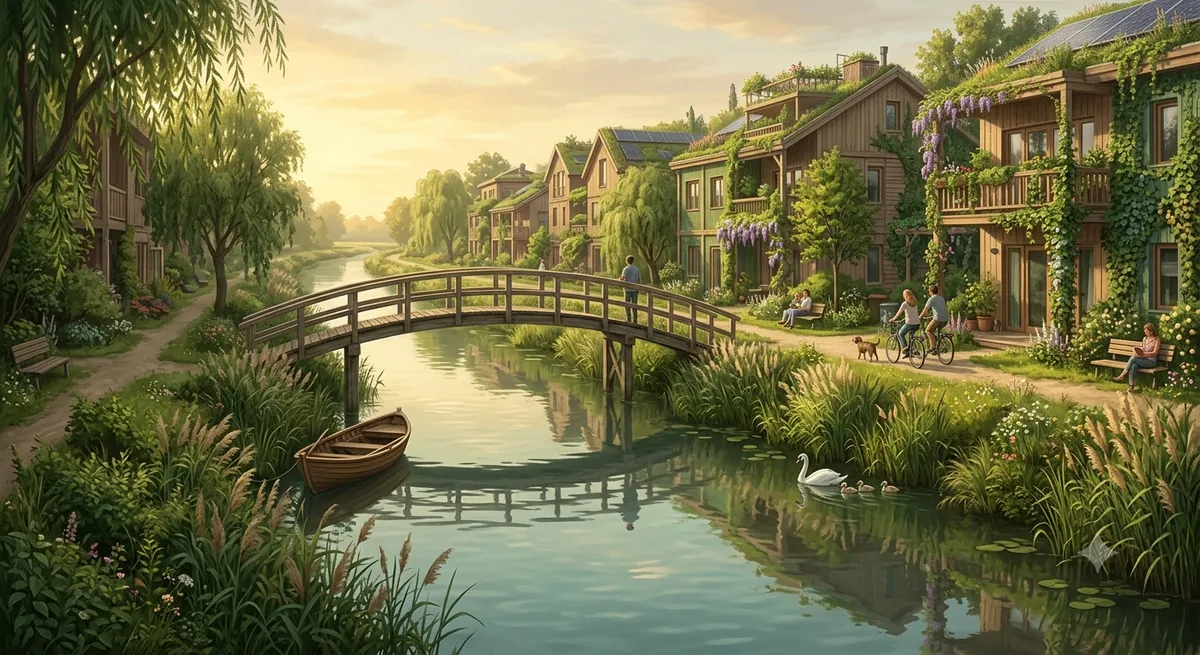
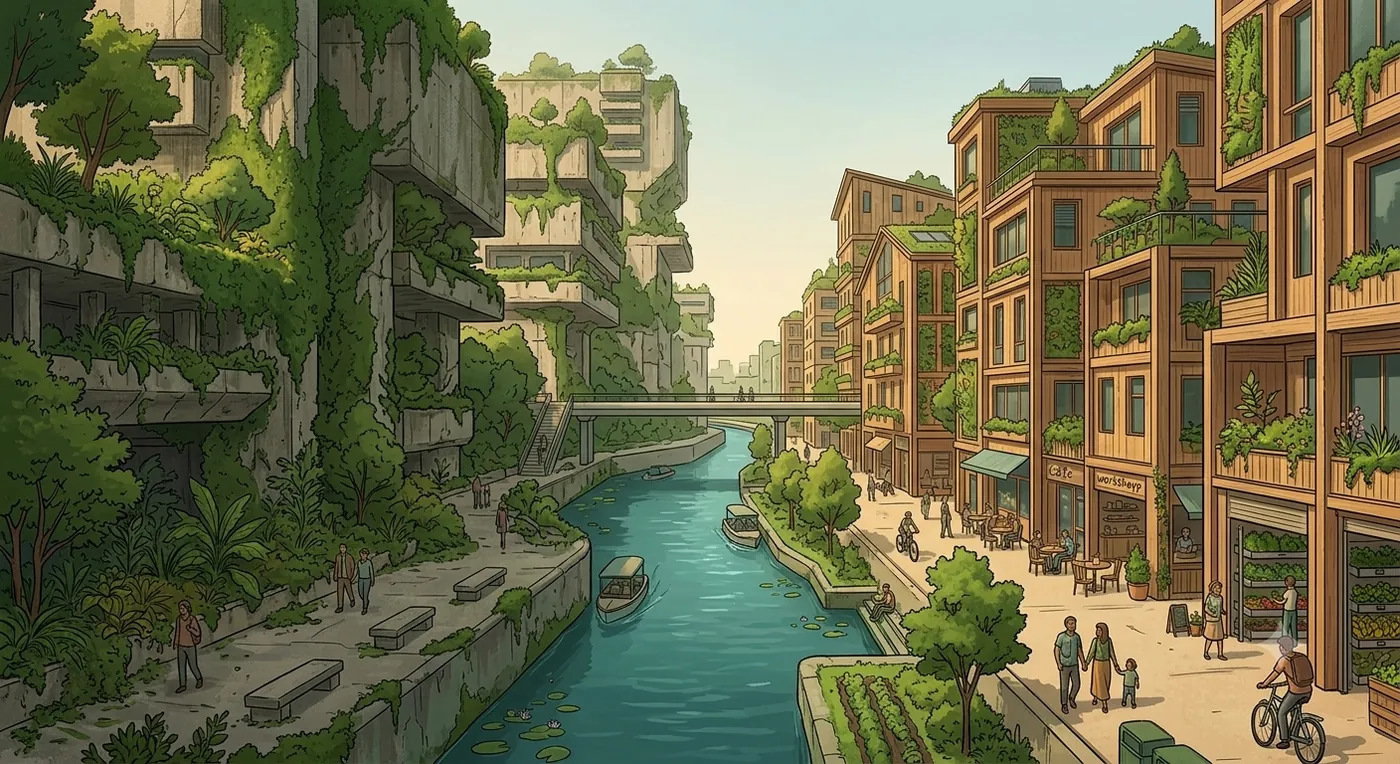
Water is the city's signature. Canals with wharves and terraces on the water, in the spirit of Utrecht, but as a second layer of life rather than decoration. Rain is caught in canals, swales and ponds that are nature, cooling and storm buffer at the same time.
And it goes further. The water treatment feeds the plants in the nurseries, turning water into one cycle that ties drinking, cooling, food and identity together. It is the city's bloodstream, not an ornament.
Deliberately not uniform. One district is warm timber and greenery, another is old concrete slowly being taken over by plants. That diversity solves the biggest problem of planned cities: that they feel sterile and soulless. And it gives you choice, because just as people gravitate to a hamlet that fits their life, they pick a district that fits their taste. Below ground sit the technology, the parking and the logistics. Above ground only people and greenery, with no home more than a stone's throw from real green.
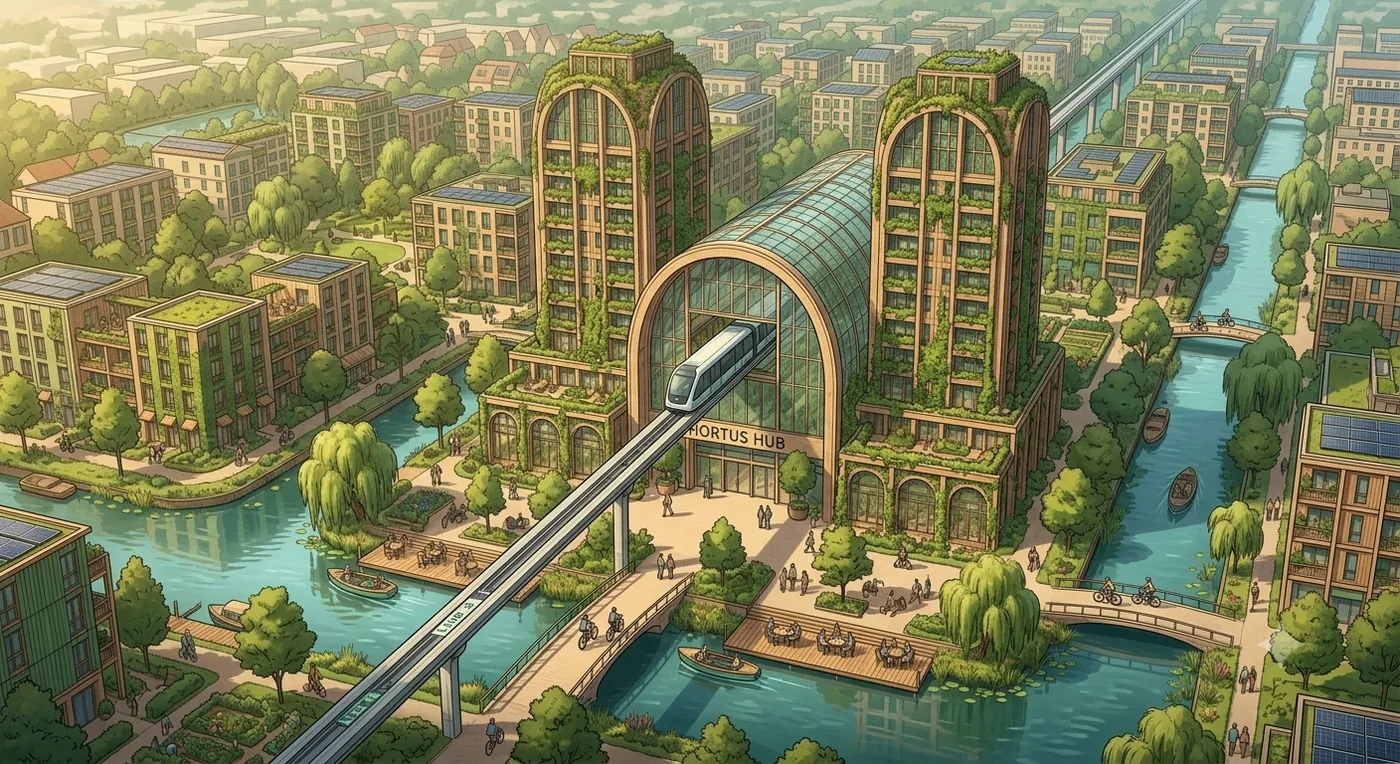
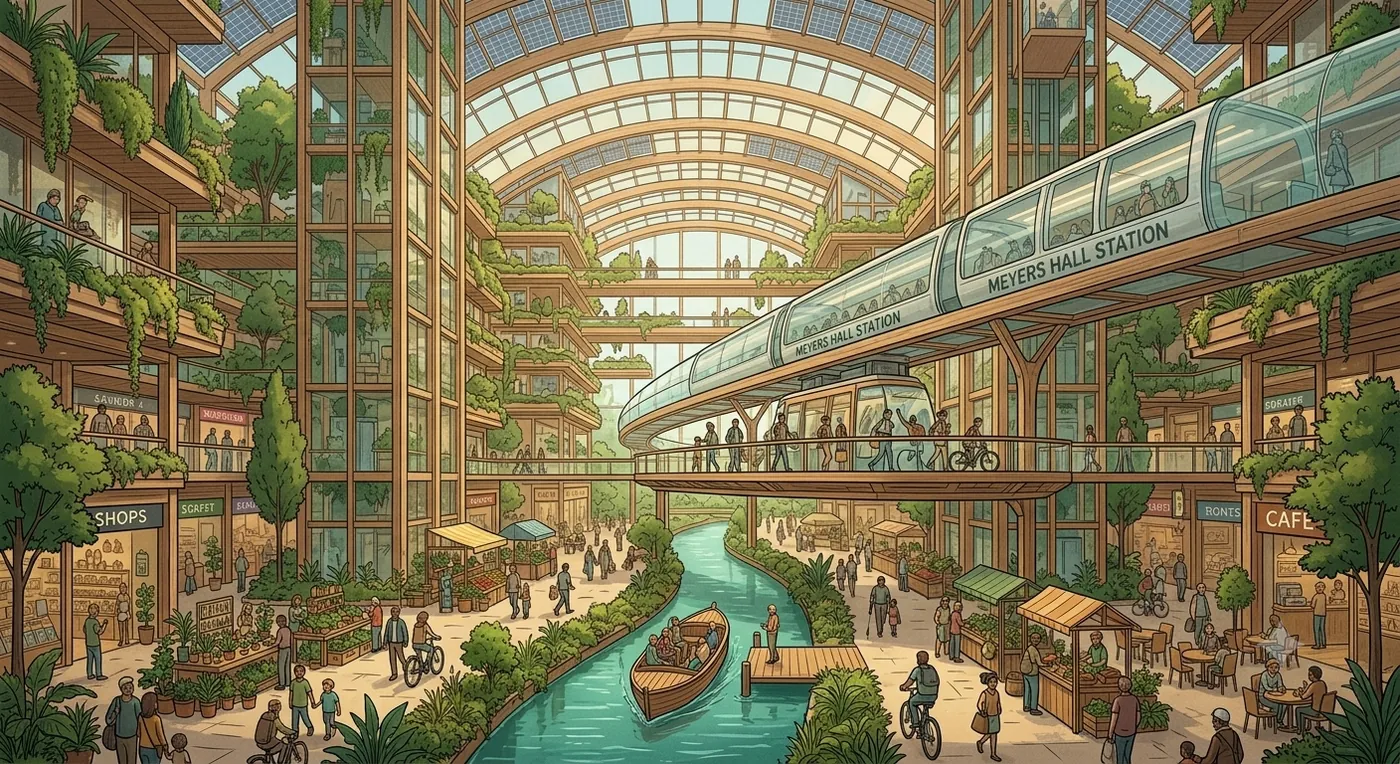
At the core of the centre stands one building that brings everything together: the crown. The transit line runs straight through it, so you step off the pod or the intercity line and stand right in the great central hall. Not a station beside the city, but arriving in the middle of life itself.
That hall is a covered town square: a green winter garden full of plants, with water woven through it where boats can even moor. Concerts, markets, fairs, and simply the daily flow. Shops and businesses below, homes and offices in the towers above.
Around the crown stands a family of specialised venues that complement rather than compete: a concert hall, theatre, museum, sports hall, science and maker hall, and a swimming pool. Together they form the cultural heart, and every city in the network gets its own interpretation of it.
And this is how it keeps itself running: with its own energy, water and food.
To Self-sufficiency